Showing posts with label Kaye M.. Show all posts

Friday, December 20, 2024

How to Build a Story...Or, the Big What If by Frances O'Roark Dowell

 How to Build a Story...Or, the Big What If by Frances O'Roark Dowell - 128 pages, ⭐⭐⭐⭐⭐

A middle-grade introduction to writing stories, from brainstorming ideas to publication.

Although this is a middle-grade title, I would recommend it for writers and aspiring writers of all ages.  Frances O'Roark Dowell does an excellent job breaking down each piece of the writing process into small chunks that are easy-to-understand for kids and not as overwhelming for adults as many other writing advice books can be.  I really liked her framing of a story's plot as a combination of big problems, sticks and stones (smaller problems), and the monster (the biggest obstacle yet).  It's a slightly different way of thinking about plot that makes more sense to me than something like a beat sheet or a traditional outline.  A very helpful book.  

The Life of Thomas More by Peter Ackroyd

 The Life of Thomas More by Peter Ackroyd - 480 pages, ⭐⭐⭐⭐☆

A highly-detailed biography of Thomas More, the Lord Chancellor of England who was imprisoned in the Tower of London and ultimately beheaded for his refusal to accept King Henry VIII's claim of supremacy over the Pope and the King's marriage to Anne Boleyn.

I watched A Man for All Seasons (1966; dir. Fred Zinnemann) back in March, and was unexpectedly charmed by the witty dialogue and the intense conviction with which Paul Scofield portrays Thomas More.  As the film is a fictionalized adaptation of historical events, I was curious how accurate it is, so I picked up The Life of Thomas More by Peter Ackroyd.  Although I enjoyed reading the book, I wouldn't necessarily recommend it for the casually curious.

I got the book in May, and finally finished it a whole seven months later.  It's a bit of a brick -- although the copy I read was only 405 pages, with 75 pages of appendices, the book still seemed much longer than it was.  That is in no way a condemnation of Peter Ackroyd's writing; his prose is clear and engaging, and he makes a lot of interesting observations and connections (there is an entire chapter comparing Martin Luther and Thomas More, for example, and Ackroyd finds a lot of similarities between the two, despite their very heated disagreement in regards to religion).  Ackroyd, however, has a tendency to go into almost superfluous amounts of detail -- I didn't get to where A Man for All Seasons starts until late October.  Granted, The Life of Thomas More tells More's entire life story, while A Man for All Seasons focuses only on his final six years or thereabouts.  Even so, I thought Ackroyd spent a few too many chapters discussing More's childhood and young adulthood.  The high level of detail Ackroyd gives to More's career as a lawyer makes sense, as it informs so much of More's behavior, writing, arguments, and his character as a whole.  There are far fewer connections made between More's childhood and adulthood, which makes the length and amount of chapters focusing on More's childhood seem excessive.  

The other issue I have with the book, which I hesitate to even call an issue, is Ackroyd's penchant for direct quotes.  He frequently quotes primary sources verbatim, complete with untranslated Latin and Early Modern English spellings.  One of the final chapters is just the transcript of Thomas More's trial in its entirety, without any commentary whatsoever.  While having so many direct quotes from primary sources is nice, it does make the book less readable.  I've read my share of Shakespeare and Latin texts, but it was still difficult to constantly switch back and forth between Ackroyd's commentary in present-day English and the primary sources in Latin and Early Modern English.  It might be a good idea to keep Wiktionary handy to help translate the Latin, or the Google Translate app if you just want a rough translation quickly.  

Despite my complaints, I did find the book interesting enough to finish.  I particularly liked how balanced Ackroyd's perspective on More is.  He discusses More's surprisingly-progressive views on the importance of education for women, as well as his clever satire in Utopia and his other writings.  He talks about More's love for bawdy jokes, and the many probably-apocryphal stories of his witty remarks to defendants at trial.  Most of all, though, Ackroyd portrays More as a person who was deeply frightened by the changing world around him, so much so that he was willing to give up his life for what he believed.  In short, Ackroyd writes about More the man rather than More the martyr.  He picks apart the stories and rumors that have been passed down through generations of biographers, and notes whether there is any evidence of truth behind the legend.  While I do see some of the real Thomas More in Paul Scofield's portrayal from A Man for All Seasons, his More is a bit too heroic, too perfect.  Ackroyd emphasizes that, despite More's cleverness and celebrated conscience, he was still just a flawed human being like the rest of us.  

You could say The Life of Thomas More is a book for all seasons, considering how long it took me to finish it.  I realize I keep harping on that, but I want to emphasize that this is not a book most people would pick up for a casual read.  It's a bit of a slog, really, but it's a fascinating slog.  Hardcore fans of Tudor history, people with a lot of time on their hands and a solid working knowledge of Latin and Early Modern English, and incredibly-persistent people who want to know everything about Thomas More for some reason may want to give it a try.  For everyone else, though, the Wikipedia page and/or A Man for All Seasons would probably suffice.

Tuesday, May 7, 2024

A Fatal Thing Happened on the Way to the Forum: Murder in Ancient Rome by Emma Southon

 A Fatal Thing Happened on the Way to the Forum: Murder in Ancient Rome by Emma Southon - 352 pages, ⭐⭐⭐⭐☆

True crime with a historical twist.  An insightful, opinionated, and darkly humorous account of various murders that took place in ancient Rome, examining how murder was viewed in Roman culture.  

Emma Southon is an entertaining writer, weaving contemporary pop cultural references and comparisons to modern-day law and politics into each narrative.  She writes in a conversational style that kept me engaged, and is likely to appeal to casual readers.  Although the amount of swearing might turn some people off, I was not bothered by it.  There were times I got confused from the sheer number of similar-sounding Roman names, but Southon overall does a good job of summarizing events and clarifying who is important.  For example, she explains that there were two Brutuses involved in Julius Caesar's assassination (Marcus Junius Brutus and Decimus Junius Brutus Albinus), but "nobody cares about" Decimus.  She also focuses quite a bit on Roman women, both famous and forgotten, and has interesting things to say about why many (male) writers of the time tend to blame women for suspicious deaths.  

A Fatal Thing Happened on the Way to the Forum is a fascinating read, and despite my occasional confusion, I would highly recommend it to true crime fanatics and ancient history buffs who are not bothered by gratuitous swearing.  

Wednesday, January 10, 2024

Tales from the Death Star by Cavan Scott, Soo Lee, and Vincenzo Riccardi

 Tales from the Death Star by Cavan Scott, Soo Lee, and Vincenzo Riccardi - 96 pages, ⭐⭐⭐⭐☆

A kid living on Kef Bir, a moon in the Endor system, is about to enter the crash site of the second Death Star to prove his bravery.  A hooded stranger stops him and tells him a series of horror stories about the Death Star as a warning.  

This is a graphic novel structured as a series of short stories connected within a larger frame narrative.  As the entire book is only 96 pages long, all of the stories are extremely short, almost like flash fiction.  The first few stories feature typical horror stuff -- ghosts, zombies, monsters -- and are about throwaway characters, with the recognizable characters from the Star Wars franchise in minor roles.  The one with the ghost fleet was the best out of these, and felt the most Star Wars-y to me.  The others seemed more like horror stories with Star Wars elements, rather than Star Wars horror stories.  They could have taken place anywhere, in any time period; the fact that they take place in or around the Death Star, a long time ago in a galaxy far, far away, holds little or no significance to their plots.

I did appreciate the zombie story's theme of "efficiency at all costs," as it is very in-character for officers in the Imperial navy to want to work people beyond death.  However, the rest of that story is more goofy than anything, and the cartoony art style doesn't help that impression.  I did find the story darkly funny, but the tone is so different from the other stories in the collection that it feels out-of-place.  If you've ever wanted to see Darth Vader slashing up zombies with a lightsaber, though, this is a must-read.

The final story, "The Haunting of Grand Moff Tarkin," is the best, and is the sole reason why I've rated this book four stars instead of three.  I'm admittedly a bit biased, given that Tarkin is one of my favorite Star Wars characters, but the reason I enjoyed this story so much is that the Death Star setting is integral to its plot.  The Death Star's impending destruction is why Tarkin's wrongdoings have come back to haunt him, although he doesn't yet realize what is about to happen.  The story's horror also doesn't rely as heavily on supernatural elements or creepy creatures as the other stories in this collection.  Although there are some ghosts in this one, it's up to the reader's interpretation whether they're actually ghosts, or just in Tarkin's head.  The story has an excellent concept, is well-written, and is the only story in the collection that I wish was longer.  Unfortunately, the artwork is inconsistent; Tarkin's face, in particular, tends to vary from panel to panel, sometimes looking exactly like Peter Cushing (the actor who played Tarkin in A New Hope, and whose likeness was used in Rogue One), and other times looking more like a generic elderly man, or even Mr. Burns from The Simpsons.  I know from experience that Peter Cushing's face is difficult to draw, but I still expected a better, more consistent likeness in an official Star Wars graphic novel.

Although I wasn't too thrilled with most of the tales in Tales from the Death Star, they were all at least mediocre.  Still, I would consider this book a prime example of quantity over quality; while concluding the collection with the best story is a great idea, it left me feeling like a big chunk of the book had been wasted on lesser stories.  I don't care about the kid on Kef Bir, the criminals hunting down a monster in the Death Star, the pilots being attacked by Jedi ghosts, or the Imperial soldiers using an ancient ring to resurrect their dead comrades.  Their stories were fine, but they weren't super compelling.  I want to see more of Grand Moff Tarkin afraid of something for once in his life -- afraid of the horrors he himself inflicted upon the galaxy.  That's compelling, and it's what saves Tales from the Death Star from mediocrity.  

Tuesday, January 9, 2024

Fried Green Tomatoes at the Whistle Stop Cafe by Fannie Flagg

 Fried Green Tomatoes at the Whistle Stop Cafe by Fannie Flagg - 416 pages, ⭐☆☆☆☆

Evelyn Couch is a middle-aged woman unhappy in her marriage, who meets an elderly woman named Ninny Threadgoode at a nursing home.  Mrs. Threadgoode tells her stories about the small town of Whistle Stop, Alabama, and all the people who used to live there, including the couple who owned the Whistle Stop Cafe.

This is one of the few books whose movie adaptations are far better than the original work.  The book tries to do too much at once.  It tries to be character-driven, but has too many characters, all of whom are too underdeveloped to carry the plot.  It tries to tell a non-chronological story in two separate timelines, from two different characters' perspectives, while also interspersing newspaper articles written by a third character throughout, without a clear reason for the unusual structure, juxtaposition of past and present, or the multiple points of view.  It tries to be a love story, a history of Whistle Stop, a crime drama, an intergenerational friendship story, and a woman's journey to find herself.  It tries to address racism while viewing the Old South with a nostalgic lens, without understanding the contradictions inherent in that.  Simply put, this is an incredibly ambitious book, but whether due to lack of skill, lack of experience, or lack of revision, Fannie Flagg could not pull so many elements together into a cohesive whole.  

Fortunately, many of the book's issues were fixed in the movie adaptation, which Fannie Flagg was involved in writing.  The number of characters got trimmed down for the movie, the remaining characters are more developed, and the plot follows a more chronological progression.  I would consider the book to be the first draft, and the movie the final draft.  

Although I enjoyed Idgie and Ruth's love story in the novel (it's toned down substantially in the movie), I found the rest of the book boring and infuriating rather than folksy and charming.  I quickly grew tired of hearing about Dot Weems's "other half" in the newspaper clippings, and wished Evelyn would just walk away from Mrs. Threadgoode so Evelyn could eat her candy bars in peace, and I no longer had to be the captive audience for another of Mrs. Threadgoode's stories.  More so than anger or boredom, however, I felt immeasurable disappointment.  There is a good concept here, as evidenced by the excellent movie adaptation, but it's weighed down by trying to do and be too much at once.  It reads more like an experiment in new techniques than a finished novel.  

I am happy that Fannie Flagg was able to overcome the fear and embarrassment she felt about writing due to her dyslexia, but this book is, quite frankly, a mess.  Shannon Hale once said, "I’m writing a first draft and reminding myself that I’m simply shoveling sand into a box, so that later, I can build castles."  Fried Green Tomatoes at the Whistle Stop Cafe is not a castle -- it's sand in a box.  It reads like an early draft, but is presented as a finished work, which leaves me no choice but to rate it based on the same standards I would rate other finished works.  Therefore, I rate it one star out of five.  

Dead and Breakfast by Kate Kingsbury

 Dead and Breakfast by Kate Kingsbury - 288 pages, ⭐⭐☆☆☆

While going through a messy divorce, Melanie West helps her grandmother, Liza, fix up an old house, with plans to turn it into a bed and breakfast.  Their plans are put on hold, however, when they find a dead body in one of the walls.  As the bed and breakfast will remain closed until the case is solved, Melanie and Liza take it upon themselves to solve the case so they can open before they run out of money.  There's also a ghost who occasionally laughs and moves things around, freaking everyone out a bit.

It's a cozy mystery, but more cozy than mystery.  Most of its 288 pages are taken up with shopping, cooking, worrying about running out of money, and Liza pressuring Melanie to get together with a hunky local cop.  The ghost does even less than Liza and Melanie, and when something supernatural does happen, the main characters are spooked for a moment, then they shrug and decide to go shopping or something.  There is a mystery, but it's so bland and underwhelming that it makes the book feel even more like a waste of time.  

Why is this two stars and not one, then?  Liza's 'find yourself a man' mentality aside, I did like her character.  She reminded me of Betty White.  Melanie also adopts a dog in the second half of the book, and he's adorable.  The dog and Liza's spunk, however, are the book's only redeeming qualities.  There just isn't much reason to read Dead and Breakfast.


Saturday, December 16, 2023

The Joker Presents: A Puzzlebox by Matthew Rosenberg, Jesús Merino, and more

 The Joker Presents:  A Puzzlebox by Matthew Rosenberg, Jesús Merino, and more - 252 pages, ⭐⭐⭐⭐☆

The Riddler has been murdered, and all of the other Batman villains we all know and love to hate are suspects.  In an interview room, the Joker tells Jim Gordon and Harvey Bullock all he knows, but can they trust his story?  Of course not, it's the Joker -- but we're getting ahead of ourselves here.

This graphic novel is reminiscent of the Akira Kurosawa film Rashomon in that the story is told from several characters' perspectives, which often contradict each other.  Each characters' version is drawn by a different artist.  The concept is interesting, although most of the artists don't take it far enough; for the most part, I didn't feel like the different art styles gave me any more insight into how the characters think.  Harley Quinn's perspective is the only one where the art helps establish her mindset and her opinions of the other characters, particularly the Joker.  It would've been nice to see the art complement the shifting perspectives more.

Although the story did hold my attention, it did seem too long at times, as though the Joker was intentionally dragging it out.  Oddly enough, Batman himself barely appears at all, instead leaving much of the detective work to Gordon and Bullock.  I often wondered why Batman didn't just jump in and solve the case, especially because it seemed like he was just hanging out on the roof of the police precinct whenever it was convenient for him to show up.  While it doesn't make sense from a character standpoint for him to keep his distance from the case, I finally realized at the end why the lack of Batman and the novel's excessive length were necessary for the narrative to work.  Sure, it would be a much shorter story if Batman was involved, but that would defeat the purpose.  Without spoiling too much, I will say that this is a shaggy dog story at heart, a joke where the whole point is to go on forever until finally reaching an underwhelming punchline -- very appropriate for the Joker.  As long as you approach it from that perspective, The Joker Presents:  A Puzzlebox is a well-drawn, funny graphic novel with an interesting narrative structure and a story that will keep you guessing.  


Twenty-One Days by Anne Perry

Twenty-One Days by Anne Perry - 303 pages ⭐⭐✫✫✫

Young defense attorney Daniel Pitt has twenty-one days to prove his client's innocence, else his client will be executed for murdering his wife.  

Have you ever watched a two-hour episode of Dateline that didn't need to be two hours long?  Upon returning from each commercial break, you get to hear The Facts Thus Far summed up over and over, while the detectives continue to be stymied by the case that's rapidly growing cold.  It's not until hour two that things start to get interesting.  By the end, you find out that the murderer is whoever you thought it was all along, and you think of all the much more worthwhile things you could've done with your time. 

Twenty-One Days is like one of those two-hour Dateline episodes.  Most of the book consists of Daniel either filling in his acquaintances on The Facts Thus Far, or debating whether his client is guilty.  These conversations and musings are almost always repeats of each other, adding little or nothing to what the characters had previously talked or thought about.  I was only about 80 pages in when I began to doubt that Anne Perry had enough story for a 300 page novel.  

To make matters worse, there is very little description of the setting or the characters.  This is historical fiction, set in the Edwardian period, but it lacks atmosphere that would give it a real sense of time and place.  Mentions of women's suffrage and Daniel's amazement at an X-ray machine are the only elements that establish the setting.  Perry's descriptions of rooms are decent, but her descriptions of London are minimal at best and nonexistent at worst.  Character descriptions are equally lacking, often so ambiguous as to be useless.  Perry repeatedly describes one character as having an "odd face."  What is that supposed to mean?  "Odd" is so vague and subjective that it remains a mystery what Perry meant this character to look like.  Instead of springing to life, the characters and setting remained indistinct in my mind, mere words on the page rather than real people in a real city.

This is not to say that Twenty-One Days has no redeeming qualities.  Daniel Pitt is a likeable character, reminiscent of Phoenix Wright in that he is an inexperienced and rather naïve attorney with a detective's instinct.  The plot does become more interesting towards the second half of the book, with a few twists I didn't see coming.  For the most part, however, Twenty-One Days offers all of the repetition of a too-long Dateline episode without Keith Morrison's chilling narration -- and I would rather watch one of those episodes than read this book again.  Unfortunately, this book is the pit(t)s.  

Wednesday, September 27, 2023

Batman: Arkham Asylum: A Serious House on Serious Earth, by Grant Morrison, Dave McKean, and Gaspar Saladino

Batman:  Arkham Asylum:  A Serious House on Serious Earth - ⭐⭐⭐⭐✩

 
It's April Fools Day, and the inmates at Arkham Asylum have taken over, demanding Batman in exchange for their hostages.  Batman goes in to stop the madness, only to enter a nightmare.  Past mingles with present as the story of Amadeus Arkham, the founder of Arkham Asylum, is told alongside Batman's journey through the asylum.

This was a difficult book to rate.  The story is confusing, and the lettering is tiny and hard-to-read.  However, the artwork is appropriately creepy and looks entirely different from any other comic or graphic novel I have ever seen.  The Amadeus Arkham story was fascinating, especially because so much of it ended up in the video game Batman:  Arkham Asylum.  Although Batman himself doesn't really do very much throughout the book, he does come off as more human than he sometimes does.  He's scared, just like most people probably would be if they were trapped in an asylum with the entire Rogue's Gallery.  

The strange artwork and confusing story make reading the book an uncomfortable, disorienting experience, but it feels appropriate given the setting, and it almost makes you question your own sanity.  The lettering, though, is borderline-illegible at times, especially the Joker's dialogue; although this was clearly done for artistic effect, it only makes reading the dialogue a chore.  The lettering is the main reason why I rated this book four stars instead of five; although I didn't really enjoy the book per se, it is still an interesting read, if only for the artwork and the Arkham backstory.  


Batman: The Killing Joke, by Alan Moore, Brian Bolland, and Tim Sale

 Batman:  The Killing Joke - 50 pages ⭐⭐⭐⭐⭐


This book is really two interwoven stories:  the Joker's origin story (or, well, one of them, anyway) and the Joker trying to drive Commissioner Gordon insane.  The Joker shoots Barbara Gordon, permanently paralyzing her (making this Oracle's origin story, too), and kidnaps the Commissioner, all to prove that one bad day can drive someone as insane as he is.

Although this is a really short book, there is a lot packed into it.  Can one bad day really cause anyone to become like the Joker?  The ending seems to prove otherwise, at least in one character's case, but is ambiguous enough to leave you wondering.  The art is fantastic, as well.  A great read.

Batman: Knightfall, vol. 2: Knightquest, by Chuck Dixon, Doug Moench, Alan Grant, Jo Duffy

 Batman:  Knightfall, vol. 2:  Knightquest - 656 pages ⭐⭐☆☆☆


Someone has to take over for Batman while Bruce Wayne recovers from a broken back.  Bruce refuses to contact Dick Grayson for help, as he believes he has his own identity as Nightwing now.  Instead, Bruce enlists the help of Jean-Paul Valley.  Jean-Paul's father was Azrael, the assassin for the Order of St. Dumas.  Azrael wanted Jean-Paul to be his successor, so he brainwashed him with a thing called the System that gives him the ability to perform amazing feats of strength and agility, as well as invent things.  Side effects may include hallucinations, delusions, and disregard for human life.  When Bruce leaves for South America to rescue his doctor and Tim Drake's father from kidnappers, Jean-Paul goes off the deep end, leaving many to wonder whether Batman has just changed his methods, or become a different man entirely.

In case you were wondering, no, this book is not about Bruce and Alfred rescuing Mr. Drake and Dr. Kinsolving.  That isn't even a subplot, which is a shame, because it would probably make a much more interesting story than the tale of Jean-Paul Valley as Batman.  There is, apparently, a separate volume that follows Bruce and Alfred's storyline.  Knightquest, however, is a whole 656 pages of Jean-Paul Valley as Batman, fighting obscure villains, arguing with hallucinations of his father and St. Dumas, and repeatedly insisting that he was born to be Batman and that he will cleanse Gotham City of the criminal scourge that has corrupted it.  There are some stand-out moments, like when the Joker tries to make a movie about killing Batman that features him actually killing Batman, or when Batman fights the gunslinging cowboy twins who look and sound like they're from the 1966 Batman TV series.  Those moments are few and far-between, though.  The majority of this volume consists of forgettable stories about forgettable villains and an annoyingly sanctimonious character who believes he is the Batman.  Robin/Tim Drake barely appears after Jean-Paul attacks him and insists that he doesn't need him anymore, leaving Jean-Paul without a voice of reason and the reader without a break from Jean-Paul.

Knightquest only gets interesting in the last 50 or so pages, when Jean-Paul really starts to lose it and crosses a line that Batman has never crossed before, Bruce returns, and Tim decides to say something to him about what has been going on since he left.  Although I did enjoy those last 50 pages, the other 600 are just boring and pointless.

Wednesday, September 6, 2023

The Phantom of the Opera by Gaston Leroux

 The Phantom of the Opera by Gaston Leroux - 360 pages ⭐⭐⭐⭐⭐

The dancers, actors, and stagehands at the Palais Garnier in Paris have been experiencing strange occurrences, which they attribute to a phantom haunting the opera house.  Only one stagehand has seen this mysterious phantom -- and, shortly thereafter, the same stagehand is found dead, hanging between two pieces of scenery.  The prima donna Carlotta suddenly falls ill, and little-known soprano Christine Daae takes her place for the performance, astonishing everyone with her talent.  She claims to have been taught by an angel of music, sent by her deceased father.  But when Christine's childhood friend, Raoul, enters the picture, Christine's angel of music turns out to be less angelic than she first believed.  

As a fan of the Andrew Lloyd Webber musical, I was curious how much the book resembles the musical.  The musical (and the 2004 film based on it) follows the first half of the book's plot quite closely, but drastically diverges in the second half.  The boat ride, the chandelier crash, the rooftop scene with the Phantom eavesdropping on Christine and Raoul -- most of the most memorable scenes are in the book, but there are enough differences to keep fans of the musical engaged.  Oddly, the book includes much more of Raoul's perspective, and there is one character, known only as the Persian, who becomes very important later on in the story, but does not appear in the musical at all.

Unlike the musical, which focuses more on the love triangle between Christine, Raoul, and the Phantom, the book is more gothic horror, something more akin to Dracula than Beauty and the Beast.  There's a creepy atmosphere throughout the book, especially when Raoul sees Christine wandering around near her father's grave at night, while a mysterious figure plays the violin.  The Phantom is also creepier, both in terms of appearance and behavior.  He looks like a living corpse, not Gerard Butler, and while it's clear that Leroux intended the reader to pity the Phantom, he also does not make him the good guy here.  The Phantom has kidnapped, tortured, and murdered people, and it's quite clear that the iconic chandelier crash actually did kill someone, although the Phantom denies all responsibility.  

The book is also similar to Dracula in that it is an epistolary novel, told through letters and other documents.  A narrator (who seems to be some sort of investigative journalist or historian, possibly even Leroux himself) pieces together letters, newspaper articles, memoirs, and other documents in an attempt to reveal the truth behind the legendary phantom haunting the opera house.  While in Dracula each document sheds more light on the truth of what the characters experienced, in The Phantom of the Opera the truth becomes murkier with each new perspective.  The characters' emotions, ignorance, and, in some cases, their ulterior motives, result in potentially-flawed and unreliable accounts of events.  Raoul, for example, is both infatuated with Christine and jealous of the Phantom, which casts some doubt on his portions of the story.  I won't spoil the ending, but I will say that it is filtered through three perspectives -- one character tells another character, who then tells the narrator what happened.  It's up to the reader to decide how much credibility each character has, and whether to believe their versions of events.  

I did wonder why Leroux includes so much of the opera house managers' perspectives.  It is amusing to see them blaming each other for the strange notes from the "Opera Ghost" demanding Box 5 and a salary of 20,000 francs, but these scenes often seem like a distraction from the main story rather than an addition to it.  There is also an absurd amount of characters, some of whom have nothing to do with the main plot.  It can get confusing, but you don't need to worry too much about remembering these side characters.  The only ones you really need to remember are the ones in the musical, and the Persian.   

Despite the excessive amount of unimportant characters and scenes, however, I would highly recommend The Phantom of the Opera to fans of the musical and fans of gothic horror.  It's brilliantly written, atmospheric, and as captivating as the Phantom's voice -- just don't expect Gerard Butler to be behind that mask.


Batman: Knightfall, Vol. 1 by Chuck Dixon, Doug Moench, Jim Aparo, Graham Nolan, Adrienne Roy, John Constanza

Batman:  Knightfall, Vol. 1 - 630 pages ⭐⭐⭐⭐⭐

The inmates have broken out of Arkham Asylum, and Batman has taken it upon himself to apprehend them all.  Despite Robin and Alfred's repeated warnings that he is pushing himself too far, Batman continues fighting through his pain and exhaustion until he finally reaches his breaking point -- and Bane, perhaps his toughest enemy yet, breaks the Bat.

This was a fun read.  Most of the famous Batman villains appear at least once, and there's a lot of action.  It all feels chaotic, but not so chaotic that it's hard to follow.  A decent chunk of the book follows Bane's backstory and thought processes as he becomes increasingly obsessed with defeating Batman.  Before reading this, I only knew Bane from the Arkham games, where he's portrayed more as big, dumb muscle, so it was interesting to see him portrayed as Bruce Wayne's intellectual equal.  By the end, I was so excited to find out what happens next that I immediately started reading Vol. 2.

Saturday, May 13, 2023

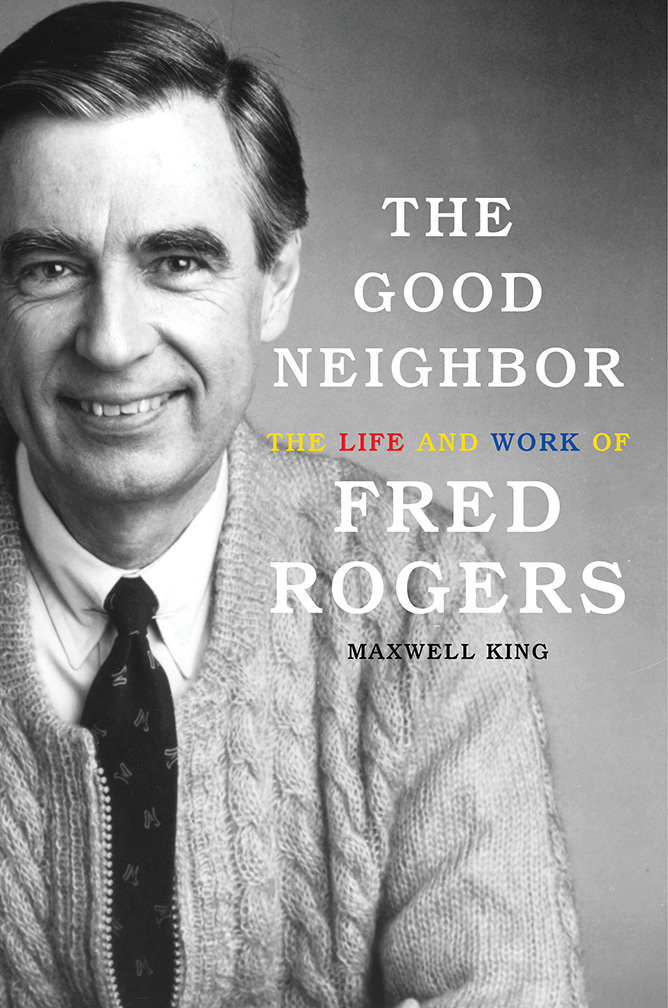
The Good Neighbor: The Life and Work of Fred Rogers by Maxwell King

The Good Neighbor:  The Life and Work of Fred Rogers by Maxwell King, 416 pages 

This was the first full-length biography of Fred Rogers ever published.  It covers everything from his upbringing as the lonely, often-bullied son of rich parents to his rise to fame as the host of Mister Rogers' Neighborhood on PBS and his continuing legacy as the nicest person in the entire world.  The book also compares Sesame Street's louder, faster-paced world to the Neighborhood's slower, quieter, almost zen approach to educational programming.  Considering that both are well-known, long-running kids' shows on PBS, the comparison does make sense.  Although I watched both shows as a kid, I never thought to compare them until reading King's book.  
There are a lot of anecdotes from Rogers' family members, as well as people he worked with on the Neighborhood and on other shows, including Old Friends...New Friends, which was his brief attempt at producing a talk show for adults.  My favorite of these anecdotes involves a family who visited the set of Mister Rogers' Neighborhood.  The family's 12-year-old son was autistic and nonverbal.  When Mr. Rogers came out to greet the family, he brought the King Friday XIII and Queen Sara Saturday puppets with him, and spoke to the boy in-character as the puppets.  The boy carried on an entire conversation with the King and Queen of Make-Believe.  His father was crying so hard that a crew member had to hold the camcorder for him, and that same crew member gave the family their own puppets so they could communicate with their son at home. 

The author, Maxwell King, was a longtime acquaintance of Fred Rogers, and his admiration for him shows through in his writing.  Unfortunately, King is not the best writer.  I occasionally had to reread a sentence multiple times before I could figure out what he meant to say.  Several times, I was left puzzled by his odd choice of words.  The book is also rather repetitive; information that was in previous chapters often shows up again in later chapters.  As a result, each chapter feels more like a self-contained essay than part of a cohesive whole.  Despite these flaws, however, I would still recommend The Good Neighbor to any friend or neighbor who is interested in learning about Fred Rogers himself or Mister Rogers' Neighborhood.

⭐⭐⭐⭐ ☆